
£9.44
- Shop with Peace of Mind
- Efficient and effective customer service, online.
- Top-Notch Quality
- 100% High-Quality Guarantee

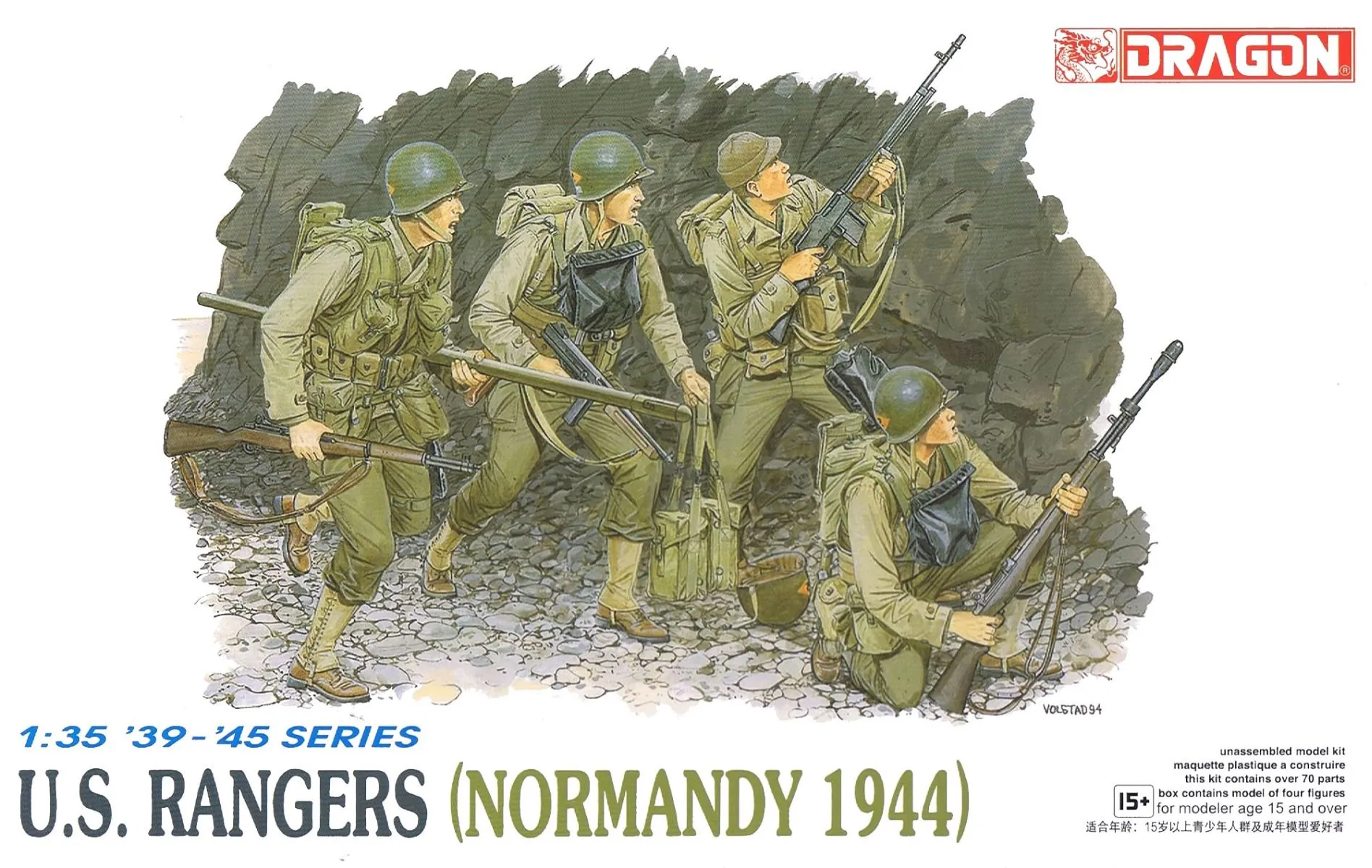
The U.S. Rangers were a specialized elite infantry unit within the United States Army during World War II.
Known officially as the 2nd and 5th Ranger Battalions, they were trained and equipped to undertake difficult and high-risk missions, often behind enemy lines.
During the Normandy landings in 1944, the U.S. Rangers played a crucial role in the initial assault on Omaha Beach, one of the five landing zones on the coast of Normandy, France.
Tasked with capturing key strategic positions and neutralizing enemy defenses, the Rangers faced a formidable challenge due to the heavily fortified German positions.
Under the leadership of Lieutenant Colonel James Rudder, the U.S. Rangers carried out a daring assault on the cliffs of Pointe du Hoc, a prominent German stronghold overlooking the beach.
Scaling the 100-foot cliffs using ropes, ladders, and sheer determination, the Rangers fought their way to the top and successfully neutralized enemy positions.
Despite sustaining heavy casualties, they held their ground and defended the position against counterattacks.
The actions of the U.S. Rangers at Pointe du Hoc demonstrated their exceptional bravery, physical prowess, and combat effectiveness.
Their success in securing the cliffs and clearing the way for subsequent landing forces played a vital role in the overall success of the Normandy invasion.
The U.S. Rangers were known for their rigorous training, specialized combat skills, and ability to undertake high-risk missions.
They were often called upon to perform tasks such as reconnaissance, raids, and counterattacks behind enemy lines.
Their training emphasized physical fitness, marksmanship, and small-unit tactics, enabling them to operate effectively in difficult terrain and adverse conditions.
The achievements of the U.S. Rangers during the Normandy campaign and throughout World War II have solidified their reputation as a highly skilled and dedicated fighting force.
Their bravery and determination in the face of overwhelming odds continue to be remembered and honored as a testament to their valor and sacrifice during one of the most pivotal moments in history.
| SKU | DRG6021 |
|---|---|
| Manufacturer | Dragon |
| Scale | 1/35 |
| EAN | 0089195860217 |
| Short Description | Dragon 1/35 U.S. Rangers Normandy 1944 # 6021 |
Be the first to review “Dragon 1/35 U.S. Rangers Normandy 1944 # 6021”
Related products

Military Kits
Boat & Ship Kits
Military Kits
Military Kits
Military Kits
Reviews
There are no reviews yet.